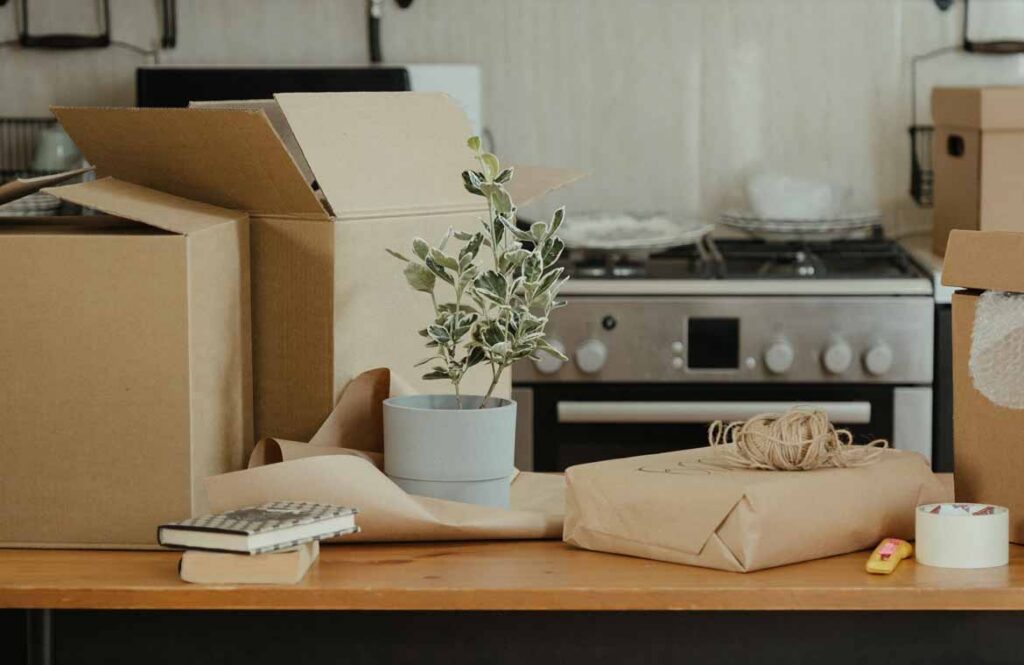
Almost every self-packed move runs out of two things: tape and small boxes. It happens at about 9pm on the second-to-last night, and it turns into a trip across town that you badly did not need.
This packing supplies checklist exists so you buy everything once. It covers what you actually need, how much of it, what it costs in New Zealand right now, and where to get it without paying retail for all of it.
The quick checklist
Boxes and containers: small cartons (book cartons), medium cartons, large cartons, a port-a-robe or two, a picture or mirror box, glass divider inserts.
Wrapping: packing paper or butcher’s paper, bubble wrap, stretch wrap, old towels and linen.
Sealing and marking: packing tape (more than you think), a tape gun, two thick permanent markers, coloured labels or dots.
Small stuff: resealable bags, cling film, cable ties or velcro straps.
Protection: moving blankets, mattress bags, furniture covers.
Tools and safety: a hand trolley, ratchet straps, work gloves, a basic toolkit with allen keys, a box cutter, a first aid kit.
How many boxes will you actually need?
The most common mistake is buying too few, and the second most common is buying too many large ones. Aim for roughly 60% small and medium, 40% large. Heavy things go in small boxes; light bulky things go in big ones.
| Household | Small | Medium | Large | Total |
|---|---|---|---|---|
| Studio or 1 bedroom | 10 | 10 | 5 | ~25 |
| 2 bedroom | 18 | 16 | 8 | ~42 |
| 3 bedroom | 28 | 24 | 13 | ~65 |
| 4+ bedroom | 40 | 35 | 20 | ~95 |
Adjust up if you have a big kitchen, a lot of books, or a garage that has been quietly filling since 2019. Then add ten more anyway. Unused flat-packed cartons cost a couple of dollars each and resell easily; running out mid-pack costs you an evening.
The essentials, and how much of each
Boxes
Buy new for anything heavy or fragile. Second-hand cartons are fine for linen, clothing and soft furnishings, but corrugated cardboard loses strength every time it is packed, moved and flattened, and a tired box fails at the base when it is full of books.
Tape
Get a tape gun and at least four rolls for an average house, six for a big one. Tape is the thing everyone underestimates. Use it double along the base seam of every box and once across the top. Skip the cheap thin rolls, which split and curl, and skip masking tape entirely: it lets go in the cold.
Paper and bubble wrap
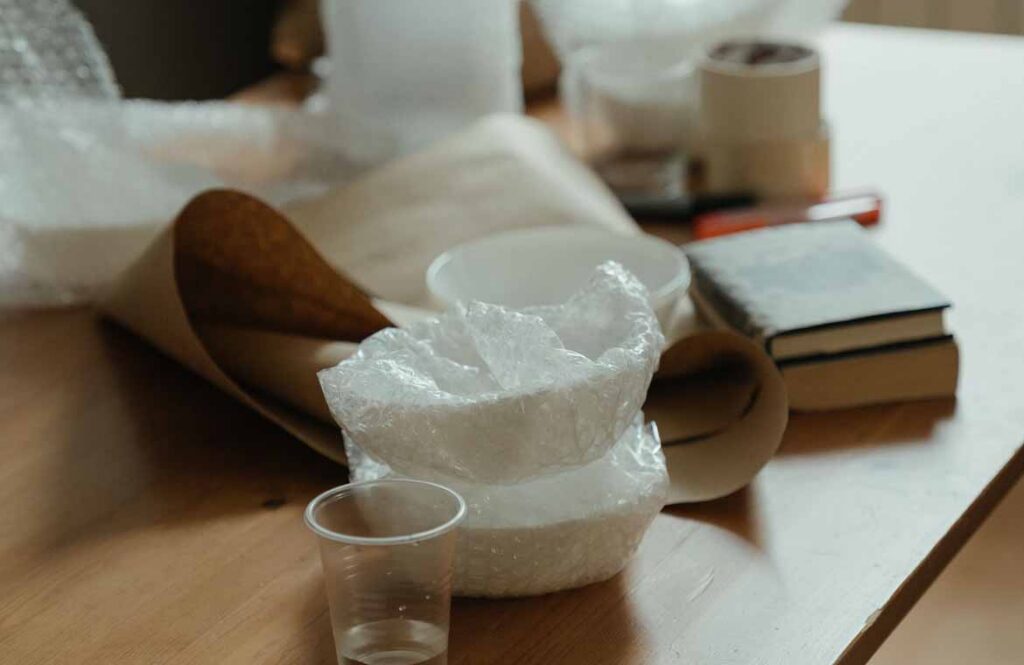
Butcher’s paper is your workhorse. It wraps, it pads, and crumpled up it fills gaps. A standard kitchen alone will eat 100 sheets. Bubble wrap goes on the outside of wrapped bundles and around anything with corners. Paper against the item, bubble wrap around the bundle, always in that order.
Markers, bags and cling film
Two thick permanent markers, because one always vanishes. A box of resealable bags for screws, cables and small parts. Cling film for putting under the lids of anything liquid before you screw them back down.
NZ carton names, decoded
Moving-box terminology here is not obvious if you have not moved recently, and overseas guides use American names that nobody in New Zealand stocks.
| Name | Roughly | What goes in it |
|---|---|---|
| Book carton | 25–40 L | Books, tins, crockery, tools, anything dense |
| Half tea chest | ~50 L | Mixed kitchenware, pantry, garage bits |
| Tea chest | 100–110 L | Linen, cushions, duvets, lampshades. Light and bulky only |
| Port-a-robe | Tall, with a rail | Hanging clothes, straight off the wardrobe rail |
| Picture or mirror box | Flat, telescoping | Framed art, mirrors, glass table tops |
| Divider insert | Fits inside a carton | Glasses, stemware, bottles |
If an overseas guide tells you to buy a “dish pack” or a “dish barrel”, it means a book carton, and a divider insert if you want the compartments.
What it costs in New Zealand
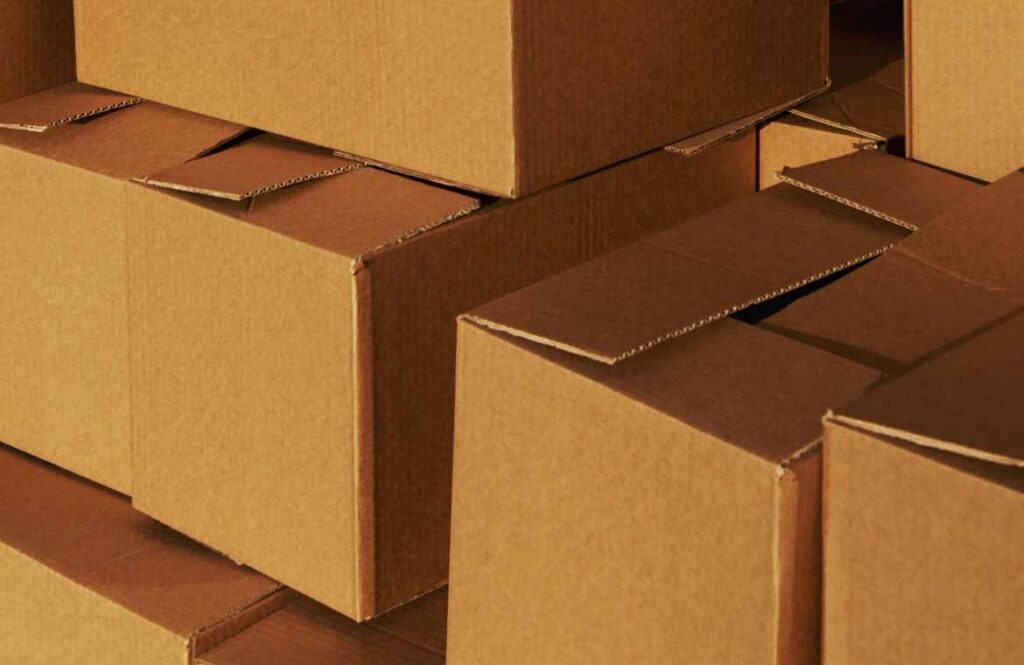
Indicative retail prices from Bunnings New Zealand, checked August 2026. Mitre 10 and packaging suppliers sit in a similar range, and buying in bulk from a packaging supplier usually beats both.
| Item | Price (NZD) |
|---|---|
| 26 L light duty carton | $2.15 |
| 38 L light duty carton | $2.75 |
| 52 L heavy duty carton | $5.25 |
| 104 L heavy duty carton | $5.96 |
| 150 L heavy duty carton | $10.75 |
| Butcher’s paper, 125 sheets | $13.88 |
| Bubble wrap, 375 mm × 25 m | $18.80 |
| Stretch wrap, 500 mm × 280 m | $25.98 |
| 24-glass divider insert | $15.95 |
| 12-bottle wine divider | $10.20 |
Sixty-five cartons for a three-bedroom house is roughly $200 on its own, before tape, paper and wrap. That is real money, and it is why the free-box routes below are worth twenty minutes of your time.
The specialty gear worth paying for
Port-a-robes. The best value item on the whole list. Clothes go straight from the rail into the box and back onto a rail at the other end. No folding, no ironing, and one port-a-robe swallows most of a wardrobe. Hire them if you can rather than buying.
Mattress bags. A mattress travels against a truck wall, gets leaned on, and picks up whatever is on the floor. A bag is a few dollars against replacing a mattress.
Glass divider inserts. If you own stemware, buy one. Wrapping wine glasses individually and hoping is how stems get snapped.
Stretch wrap. Underrated. It holds drawers shut, keeps cables bundled to their appliance, wraps a sofa against dirt, and binds awkward things together into one carryable object.
And two you can skip. Packing peanuts are messy, expensive here, and no better than crumpled paper. Electronics boxes are rarely worth it: the original box is better, and a well-filled carton is fine otherwise.
Where to buy packing supplies in New Zealand
Hardware. Bunnings and Mitre 10 stock the full range and are open seven days, which matters when you need tape at 4pm on a Sunday.
Packaging suppliers. Cheaper per unit if you are buying 60 cartons. Worth a phone call for anything bigger than a two-bedroom move.
Reusable plastic crate hire. Several operators hire out stackable plastic crates, delivered and collected. No cardboard to buy, flatten or dispose of, and often comparable in price to buying new. Good for apartments where storing 65 flat cartons is not realistic.
Free and second-hand. Trade Me and local community pages are full of people offloading boxes the week after their own move. Packaging Recyclers in Auckland sells used cartons cheaply. Ask your own movers too, since most have used cartons floating around: in the west, Movers West Auckland supply packing materials as part of a booking, and we can bring boxes with us too.
One warning on free boxes. Supermarket produce cartons have no lids, are often damp from a chiller, and come in shapes that will not stack in a truck. Banana boxes in particular are the enemy of an efficient load. Liquor store boxes are the exception: they are strong, uniform, and often have dividers built in.
Room by room: what each one actually needs
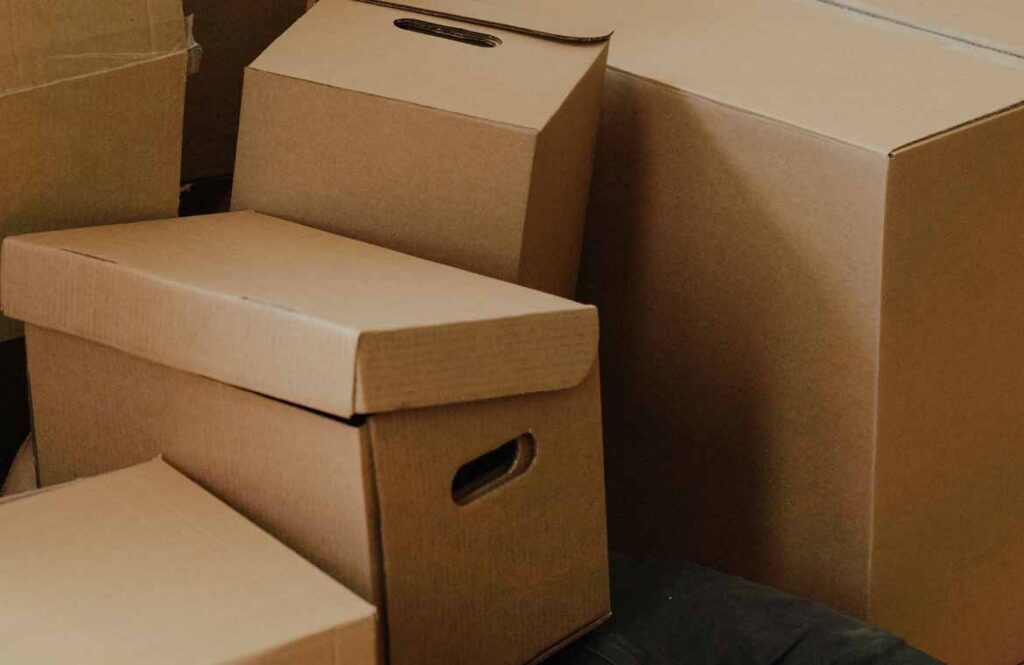
Kitchen. The most supply-hungry room in the house and the one people underestimate. Small cartons only, plus most of your paper, plus a divider insert if you own stemware. Budget a full ream of butcher’s paper for the kitchen alone.
Bedrooms. Port-a-robes for hanging clothes, large cartons for bedding and pillows, small cartons for books and anything off the bedside table. Mattress bags. Drawers can often stay in the chest of drawers with stretch wrap holding them shut, which saves several boxes.
Living room. Picture boxes for framed art and mirrors, moving blankets for the TV and furniture, small cartons for books and media. Stretch wrap for cables, and a bag for every remote.
Bathroom. One or two small cartons, plenty of resealable bags, and cling film under the lid of anything that can leak. Shampoo through a box of towels is a miserable way to start in a new house.
Garage and shed. Heavy duty cartons only, and expect to need more than you think. Bags for fixings. Remember your movers cannot carry petrol, gas bottles, solvents or weedkiller, so set those aside for your own vehicle early rather than discovering the problem on the day.
Kids’ rooms. Medium cartons, and let them pack one box of their own with their name on it. It costs you a carton and buys a surprising amount of goodwill.
When to buy, and when to start
Buy your supplies four to six weeks out, in one go. Cardboard stores flat and takes almost no room, so there is no advantage in buying late and a real cost in being caught short.
Start packing at the four-week mark with things you will not miss: out-of-season clothes, books, spare linen, decorations, the garage. By two weeks out you should be into the bulk of the house. The kitchen and the bathroom go last, in the final two or three days, because you need them right up until you don’t.
If you want the whole timeline rather than just the supplies, our Auckland moving checklist maps the eight weeks before moving day week by week.
The tools and safety kit everyone forgets
A hand trolley saves your back and roughly a third of your time on box runs. Ratchet straps if you are driving anything yourself. Work gloves, because cardboard edges and unsanded timber will find your hands by hour three.
A basic toolkit with allen keys, a Phillips and a flathead, for beds and flatpack furniture. A box cutter, kept somewhere obvious. And a first aid kit with plasters and antiseptic, which sounds excessive right up until someone slices a thumb open on a tape dispenser.
The labelling system that actually works
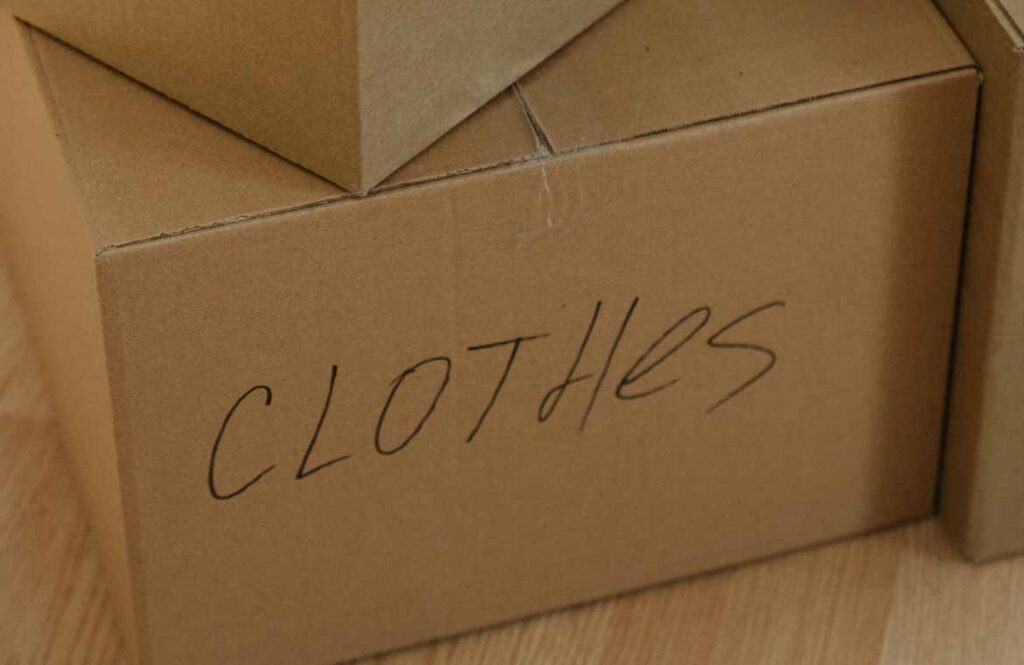
Assign every room a colour and buy dots or coloured tape to match. Put the colour on the top and two sides of each box, so it is visible however the box is stacked.
Then number every box and keep a note on your phone: box 24, kitchen, pots and baking trays. It takes five seconds per box and it means you can find the coffee plunger on day one without opening fourteen cartons. Write the destination room in words as well as colour, since your movers do not know your colour code.
Finally, one box marked OPEN FIRST on all four sides: kettle, mugs, teabags, toilet paper, hand soap, phone chargers, a torch, painkillers. It rides in your car.
What you should not buy at all
You already own a lot of packing material. Tea towels, sheets, duvets and clothing all make excellent padding, they cost nothing, and they are moving anyway. Wrapping glasses in socks is not a hack, it is just efficient.
Suitcases are boxes with wheels; fill them with books. Laundry baskets, storage tubs, chilly bins and drawer units all travel full. Every one of those is a carton you did not buy, pack, unpack and flatten.
Or skip the list entirely
Assembling all of this and then using it is roughly two full weekends for a three-bedroom house. If that maths does not work for you, our Auckland packing service brings the materials and does the packing, either for the whole house or just the rooms you would rather not face. It is also the answer for anyone downsizing or working to a tight settlement date.
Frequently asked questions
How many boxes do I need for a 3-bedroom house?
Around 65 cartons: roughly 28 small, 24 medium and 13 large. Add ten more than you calculate, because running out mid-pack costs you an evening and spare flat-packed cartons cost a couple of dollars each.
Where can I get free moving boxes in Auckland?
Trade Me and local community Facebook pages, where people offload cartons the week after their own move. Packaging Recyclers sells used boxes cheaply. Liquor stores are the best retail source because their boxes are strong and often have dividers. Ask your movers, since most carry used cartons.
What is the difference between a book carton and a tea chest?
A book carton is the small one, 25 to 40 litres, for dense things like books, tins and crockery. A tea chest is around 100 litres and should only hold light bulky items such as linen, cushions and duvets. Filling a tea chest with books makes a box nobody can lift.
Is bubble wrap or packing paper better?
Both, in that order. Paper goes against the item because it grips and stops things sliding, bubble wrap goes around the outside of the bundle for impact. Bubble wrap alone lets items slide, and pressed against glaze or a screen for days it can leave marks.
How much do packing supplies cost for a house move in NZ?
Budget $250 to $350 to kit out a three-bedroom house with new materials at retail. Cartons alone are around $200 of that. Mixing in free and second-hand boxes for clothing and linen can halve it.
Can I use supermarket boxes for moving?
Only for light, non-fragile things. Produce cartons have no lids, are often damp from a chiller, and their odd shapes will not stack in a truck. Liquor store boxes are the exception and are genuinely good.
What tape should I use?
Proper packing tape on a tape gun, at least four rolls for an average house. Double the base seam of every box. Avoid thin budget rolls, which split and curl, and never use masking tape, which lets go in the cold.
Do movers supply boxes?
Most do, either sold with the job or included with a packing service. Swift Movers can bring materials with us. It is worth asking when you book, because it saves a separate trip and you only pay for what you use.
Ready to move? Let us take the heavy part
Swift Movers handles house moving across Auckland seven days a week, 7am to 7pm, and moves nationwide. Two movers and a truck at $110/hr with a $50 flat callout, no minimum hours.
We cover North Shore, West Auckland, Central, East, South Auckland, the Hibiscus Coast, Rodney and Franklin, with apartment moves, same-day moves, single item moves and intercity moves anywhere in New Zealand.